Cyprus Discovery

What interests you?

Discover Cyprus Heritage by Categories

Begin your exploration of the island’s iconic landmarks and vibrant culture.
Fascinating Topics

Dive into the stories that captivate and inspire.

Livadi Trail

Livadi Trail

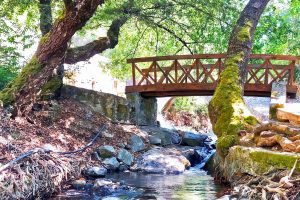
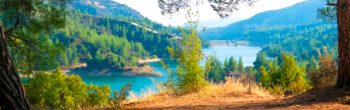
The Livadi Trail offers a serene path through the heart of the Troodos mountains. This route showcases a unique side of the island that few visitors see. It provides a peaceful escape into the cool mountain air far from the crowded beaches. The path winds through a flat plateau that hosts rare plant life. Massive black pines tower above the track and offer deep shade. This specific environment supports a delicate ecosystem that remains green throughout the entire year. Accessibility makes this location a favorite for those who want a gentle walk. The trail design accommodates people of all ages and fitness levels. Every section of the loop reveals a new perspective of the surrounding peaks and valleys. Trail Overview Location: Troodos National Forest Park Distance: 1 mile (1.5 km) Route Type: Loop Difficulty: Easy Elevation Gain: 33 feet (10 meters) Duration: 45 minutes Best Time to Visit: May – October Terrain: Paved and Flat Forest Floor Botanical Features and Rare Forest Species The Livadi Trail sits at an altitude of seventeen hundred meters above the sea level. This height creates a specific climate that favors the growth of the Pinus nigra or black pine. These trees can reach ages of over five hundred years within the Troodos range. Their thick bark protects them from the cold winters and the…

Read more
Cyprus Film Culture

Cyprus Film Culture

Contemporary Cypriot music is increasingly shaping how the island appears in film, television, and online media. Instead of generic Mediterranean soundtracks, local artists and recognisable sonic textures are being used to support storytelling, atmosphere, and identity. This shift matters because sound influences memory as much as image. When Cyprus is accompanied by its own modern musical voice, representation becomes more specific, more confident, and harder to reduce to cliché. This article explores how that change is happening, where it comes from, and why it matters now. From Background Noise to Cultural Signal For a long time, music in visual media connected to Cyprus served a functional role. It filled silence, supported mood, or softened transitions, but rarely carried cultural weight. That approach is changing. Today, contemporary Cypriot music is being used deliberately. Tracks are chosen not only because they sound pleasant, but because they signal place. Dialect, rhythm, and local sonic markers now appear within films, television segments, tourism campaigns, and short-form digital content. The result is subtle but powerful. Cyprus is no longer just seen. It is heard. This shift does not announce itself. It works quietly, embedding identity into scenes rather than explaining it. What This Trend Actually Means When contemporary Cypriot music is described as “integrated into media,” the idea is simple. Modern Cypriot artists, sounds, and…

Read more
Community Solidarity in Cyprus

Community Solidarity in Cyprus

Community solidarity in Cyprus is a long-running social system that spread risk through trust, shared labour, and reciprocity, especially during foreign rule, hardship, and displacement. In villages, it acted as a practical safety net through kinship ties, communal work, and rituals that redistributed time, food, and care when families were vulnerable. This article explains how those habits formed, how they still operate in modern cities through associations and digital networks, and why mutual support remains one of Cyprus's most durable survival strategies. Surviving Without Reliable Institutions For much of its history, Cyprus existed under external rule, shifting borders, and limited self-determination. In this environment, survival depended less on state protection and more on community reliability. Villages became self-sustaining units where food production, housing, care for the vulnerable, and conflict resolution were managed collectively. This mindset was established early. Archaeological evidence from sites such as Khirokitia shows that Cyprus's earliest settled communities were already organised around shared labour and communal responsibility. Homes were built collectively, resources were managed locally, and daily life depended on cooperation rather than individual independence. These early patterns laid the foundation for a culture where solidarity was not optional but essential. The Village as a Social Safety Net Traditional Cypriot villages functioned as living social systems rather than simple residential clusters. Kinship extended beyond immediate family to…

Read more

Cyprus: A Tapestry of Life

Uncover the island’s spiritual depth, natural beauty, and diverse ecosystems.
Curated Insights

Journey through Cyprus's most intriguing stories and themes.
Cyprus Ancient Naval Influence

Cyprus Ancient Naval Influence

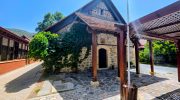
\nFor much of antiquity, Cyprus was less an island on the map and more a working platform of the sea. Positioned between the Aegean, the Levant, and Egypt, it became a testing ground where Phoenician and Greek seafarers refined ships, navigation, and maritime organisation. This article explains how those two cultures approached the sea differently, why Cyprus mattered to both, and how their overlapping naval traditions quietly transformed the island into one of the Mediterranean’s most connected societies.\n\n\n\n \n\n\n\n\n\nAn Island That Made Sense Only from the Water\n\n\n\nCyprus’s importance is easiest to understand when viewed from a ship’s deck. Sitting at the eastern edge of the Mediterranean, the island lies directly along the sea lanes linking the Aegean world with the Levant and North Africa. Any vessel moving between these regions benefited from a stop that offered fresh water, timber, copper, and sheltered anchorages.\n\n\n\nThe coastline itself encouraged maritime use. The south and east are broken into bays and coves that provide natural protection from storms, while prevailing currents make Cyprus a logical waypoint rather than a detour. Long before political borders mattered, geography had already decided the island’s role.\n\n\n\nThis is why Cyprus rarely functioned in isolation. Its history unfolded in dialogue with the sea, shaped by those who knew how to use it.\n\n\n\nTwo Seafaring Cultures, Two Ways of Seeing Cyprus\n\n\n\nThe Phoenicians…

Read more
The Cyprus Tulip (Tulipa cypria)

The Cyprus Tulip (Tulipa cypria)

Among the many wildflowers that brighten Cyprus in spring, few capture the imagination quite like the Cyprus Tulip. This rare beauty, found nowhere else in the world, emerges each year with its deep, velvety petals – often appearing almost black against the sunny landscape. Spotting one in the wild feels like uncovering a small treasure hidden on the island. How does it look like and where it grows The Cyprus Tulip, or Tulipa cypria, is a perennial bulbous plant that belongs to the lily family. There are three species of tulips on the island – Tulipa cypria, Tulipa akamasica and the parent specie of which both endemics originated – Tulipa agenensis. Tulipa cypria has been part of Cyprus’s flora for around 5 million of years, shaped by the island’s isolated geography into a separate specie during last Glacial cycles. It grows in Juniperus phoenicea maquis, pastures and cereal fields on limestone. The plant grows 15–40 cm tall, usually with four smooth, fleshy slightly bluish-green leaves, two at the base which are larger and lanceolate, and the two upper leaves which are much smaller and almost linear. Petals are deep blood-red colour with distinctive internal black blotch bordered by a yellow zone, earning the plant its nickname as the “black tulip” of Cyprus – a rare trait that makes it stand…

Read more
Cape Greco Sea Cliffs And Caves

Cape Greco Sea Cliffs And Caves

Cape Greco rises from the Mediterranean Sea at Cyprus's southeastern tip, where limestone cliffs drop sharply into turquoise waters, and erosion has carved spectacular sea caves that extend up to 80 metres into solid rock. Cape Greco, also known as Capo Greco or Kavo Greko, forms a rocky peninsula jutting into the Mediterranean between the resort towns of Ayia Napa and Protaras. The headland marks the easternmost point of both the Republic of Cyprus and the European Union, excluding outlying territories. The area covers 385 hectares protected as National Forest Park under the Cyprus Forestry Department since 1993, with additional recognition as part of the Natura 2000 network for its European ecological significance. Historical Background The limestone cliffs at Cape Greco formed from sediments deposited when shallow seas covered the region millions of years ago. Marine organisms including mollusks, corals, and microscopic creatures contributed calcium carbonate that accumulated on the seabed and eventually compressed into rock layers. Tectonic activity lifted these sediments above sea level, creating the elevated plateau that characterizes the cape today. Wave erosion shaped the detailed features that make Cape Greco distinctive. Constant pounding by Mediterranean storms exploits weaknesses in the limestone, gradually hollowing out caves, cutting through narrow points to form arches, and creating vertical channels where waves compress and release with explosive force. This process…

Read more
Category: Animals and Plants of Cyprus Animals and Plants of Cyprus
Jacaranda Plant In Cyprus

Jacaranda Plant In Cyprus

Drive through the avenues of Limassol or Nicosia in late April and you may feel you have stepped into a dream: entire streets and parks vanish beneath a shimmering canopy of lavender-blue. The source of this magic? The jacaranda – a South-American beauty whose clouds of trumpet-shaped flowers turn ordinary city corners into places of pure wonder every spring. The Trumpet-Tree Family Jacaranda belongs to the Bignoniaceae family the same group that gives us the African tulip tree and the catalpa. This family is famous for its showy, tubular flowers and woody pods. The genus Jacaranda contains about 49 species,…

Read more
Pepper Trees of Cyprus

Pepper Trees of Cyprus

Imagine strolling through a sun-drenched village square or along a quiet coastal road in late summer. A graceful tree with feathery, weeping branches catches your eye, its small greenish-white flowers having given way to clusters of shiny pink-red berries that sparkle like strings of tiny jewels. These are the Schinus species of Cyprus – elegant South-American guests whose light, peppery fragrance and airy beauty have quietly woven themselves into the island’s everyday scenery. The Pepper Trees of the Cashew Family Schinus belongs to the Anacardiaceae family – the same remarkable group that includes pistachios (Pistacia vera), mastic trees (Pistacia lentiscus),…

Read more
Cyprus Biodiversity Protection

Cyprus Biodiversity Protection

Cyprus holds exceptional biological diversity for an island of its size. The island hosts approximately 1,800 plant species, with 143 endemic taxa found only in Cyprus. Among animals, the island supports 385 bird species, 21 mammals, 24 reptiles, and 3 amphibians. Over 5,000 insect species have been documented. This diversity results from Cyprus's unique position at the crossroads of Europe, Asia, and Africa, combined with varied climate conditions and dramatic elevation changes from sea level to the 1,952-meter peak of Mount Olympus in the Troodos Mountains. The island's geological history as an uplifted oceanic plate rather than a continental fragment…

Read more
Whispers from the Wild Stalks

Whispers from the Wild Stalks

Imagine wandering through the sun-drenched fields of Cyprus, where a plant towers like a sentinel from ancient myths, its yellow blooms catching the breeze. This article invites you on a gentle journey to discover the giant fennel, a resilient Cypriot native that bridges legends of fire-thieves and hidden fungal treasures, leaving you pondering the quiet wonders hidden in everyday landscapes. A Gentle Giant's Greeting The giant fennel, known scientifically as Ferula communis, is a member of the vast carrot family, Apiaceae, which includes familiar herbs like parsley and dill. It's a perennial plant that dies back each summer only to…

Read more

Cyprus Unveiled

Discover the island's secrets and learn what lies beyond the familiar.

Monastery of Saint John Lampadistis

Monastery of Saint John Lampadistis

The Monastery of Saint John Lampadistis, located in the Marathasa Valley of the Troodos Mountains near the village of Kalopanayiotis, is one of the most distinctive monuments within the UNESCO World Heritage group known as the Painted Churches of the Troodos Region. Its importance lies not only in its remarkable frescoes but also in its unusual architectural composition. Unlike single-phase churches, this monastic complex combines three interconnected churches built in different periods, all enclosed beneath a later protective roof. This layered structure makes the monastery a rare example of architectural continuity, reflecting the gradual development of religious space in response to changing spiritual, artistic, and community needs. The monastery is dedicated to Saint John Lampadistis, a local Cypriot saint whose life is associated with piety, endurance, and miraculous healing. According to tradition, he lived in the region during the Byzantine period and became a figure of popular devotion after his death. His tomb within the complex transformed the monastery into a pilgrimage center, attracting worshippers seeking spiritual assistance. The religious importance of the site ensured its continued maintenance and expansion over centuries, leading to the creation of a complex that embodies both local religious tradition and broader Byzantine artistic influence. Architectural Composition and Structural Evolution The most remarkable feature of the Monastery of Saint John Lampadistis is the combination of…

Read more
Cyprus Museum Nicosia

Cyprus Museum Nicosia

The Cyprus Museum stands on Museum Street in central Nicosia as the oldest and largest archaeological museum in Cyprus. Founded in 1882 during British occupation, the museum houses the most extensive collection of Cypriot antiquities in the world. The institution displays only artifacts discovered on the island, creating a focused narrative of Cyprus's archaeological heritage from the Neolithic period through the Roman era.  The museum building itself carries historical importance, with construction commencing in 1908 and completing in 1924 when Cyprus remained a British colony. Extensions added in 1961 created additional galleries, storerooms, and offices that surround a central square area housing auxiliary offices, a library, and laboratories for preserving and studying items. Fourteen display halls follow chronological and thematic succession, though the collection has far outgrown existing capacity with only a small fraction on display at any time. How a petition saved Cyprus's heritage The museum was founded following a petition delivered to British authorities by a delegation headed by religious leaders of both Christian and Muslim populations. The catalyst for this action was several illicit excavations and the smuggling of antiquities off the island during the early British period.  Cypriots recognized that their archaeological heritage was disappearing to foreign museums and private collections, prompting joint action across religious communities. The British administration agreed to establish a central repository…

Read more
Folk Traditions Shaping New Cypriot Identity

Folk Traditions Shaping New Cypriot Identity

Cyprus's contemporary music scene is not driven by nostalgia, nor by imitation of global trends. Instead, it is shaped by a quiet but deliberate return to local sound. Over the past two decades, musicians across the island have begun reworking traditional Cypriot music into modern forms, blending ancient instruments, irregular rhythms, and modal melodies with rock, jazz, and electronic influences. The result is not a revival of folklore, but a living musical language that reflects modern Cypriot identity while remaining deeply rooted in place, memory, and shared experience. This evolving folk-fusion movement explains how Cyprus sounds today. It also reveals how music has become one of the island's most powerful tools for cultural continuity and dialogue. Not a Revival, but a Reconnection Unlike earlier attempts to modernize folk music, today's Cypriot fusion is not decorative. Traditional elements are not added for color. They shape the structure of the music itself. This shift became especially visible after Cyprus joined the European Union in 2004 and intensified following the financial crisis of 2013. As economic confidence declined, many artists began questioning imported cultural models and turned instead toward local traditions. Music became a way to explore identity without nostalgia, using inherited forms to speak about present realities. Importantly, this movement crosses political and cultural boundaries. Musicians from both sides of the island…

Read more
Category: Geological Cyprus Geological Cyprus
Troodos Mineral Springs

Troodos Mineral Springs

Deep in the Troodos Mountains, sulfur-rich waters rise from ancient rock, just as they have for thousands of years. These mineral springs have drawn healers, pilgrims, and travelers since antiquity. The most famous flows in Kalopanayiotis village, where thermal waters meet the Setrachos River beside a centuries-old Venetian bridge. Mineral springs produce water containing dissolved substances that alter its taste and give it therapeutic value. Salts, sulfur compounds, and gases dissolve into the water during its underground passage. The springs in Cyprus are particularly rich in sulfur, with additional minerals including magnesium and calcium. Water temperature at these springs varies…

Read more
Mesaoria Plain, Cyprus

Mesaoria Plain, Cyprus

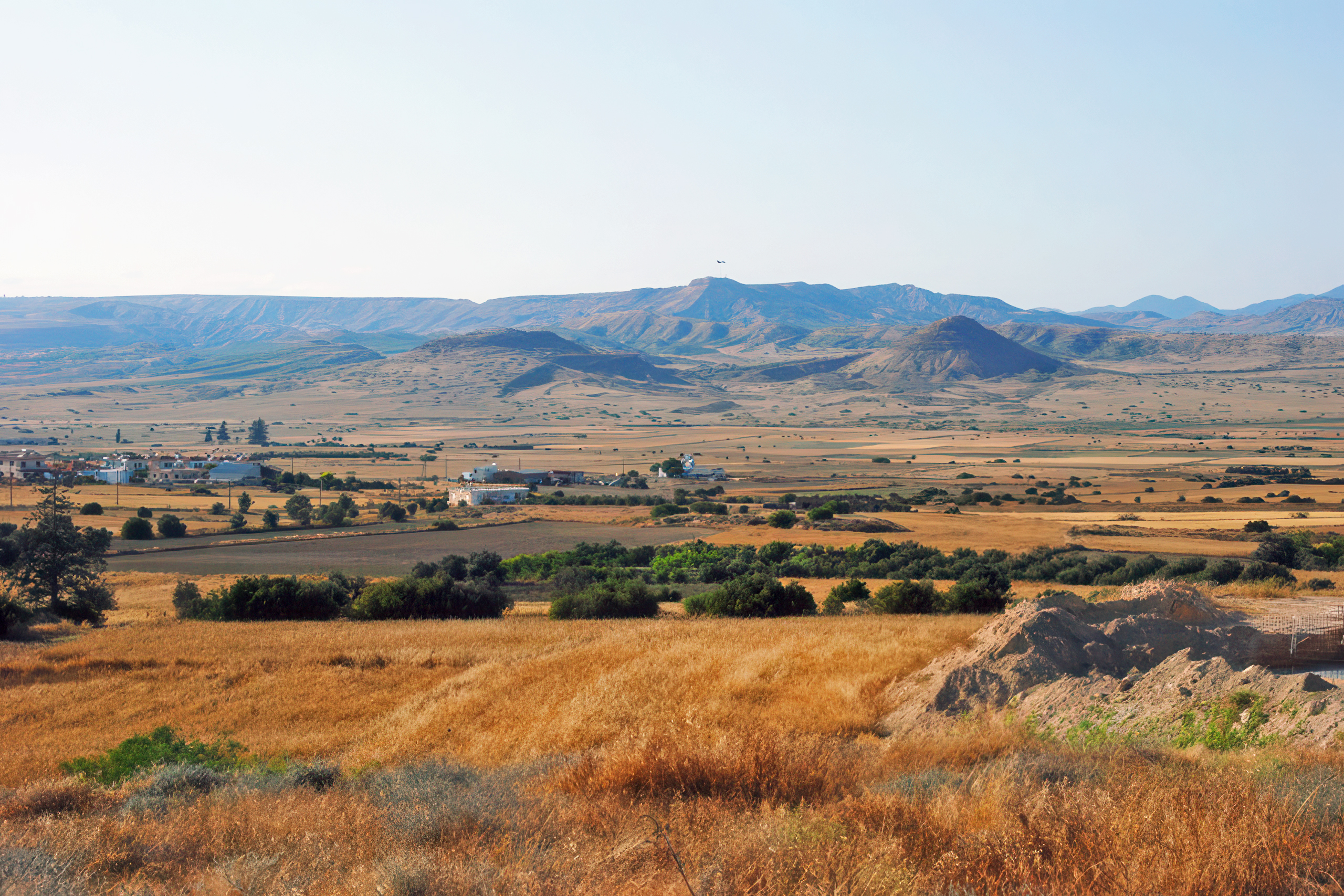
The Mesaoria Plain stretches 96 kilometres across central Cyprus between two mountain ranges. Mesaoria, meaning "between the mountains" in Greek, is a broad central plain that extends from Morphou Bay in the west to Famagusta Bay in the east. The Troodos Mountains rise to the south, while the Kyrenia Range forms a wall to the north. The plain covers approximately 1,000 square kilometres with elevations ranging from 100 metres on average up to 325 metres at its highest points. Nicosia, the capital of Cyprus, sits roughly in the centre of the plain along the Pedieos River. This positioning reflects centuries…

Read more
Marathi Cave Paphos

Marathi Cave Paphos

Avakas Gorge cuts deep into the limestone bedrock near Paphos, where towering cliffs rise 30 meters above a stream that has carved this canyon over millions of years. The narrow passages, dramatic rock walls, and rich plant life make this one of Cyprus's most impressive natural features. The gorge sits within the Akamas Peninsula on the western coast of Cyprus, about 16 kilometers from Paphos. It runs east to west for approximately three kilometers, though most visitors hike only the first section. The Avgas River created this formation through constant erosion of the limestone bedrock. Water flowing over the rock…

Read more
Troodos Mountains Biodiversity and Climate Core

Troodos Mountains Biodiversity and Climate Core

The Troodos Mountains rise from the heart of Cyprus as the island’s highest mountain system, with Mount Olympus reaching 1,952 meters above sea level. More than a scenic landscape, this mountain range forms the ecological and climatic core of the island. Its slopes regulate water supply, shape weather patterns, and support an extraordinary concentration of life found nowhere else in the Mediterranean. What makes Troodos truly exceptional is its geological origin. The mountains expose one of the most complete sections of ancient oceanic crust ever discovered on land, creating conditions that shaped a unique and fragile ecosystem over millions of…

Read more

About Us

Our website is the product of a passionate team deeply devoted to Cyprus and its rich history. Empowered by Sergey Matsotskiy and headed by Michael Dubilet, our project was made possible by specialists – historians, oceanologists, geologists, and writers – dedicated to uncovering and sharing the island’s lesser-known treasures. The advisory board includes eminent scholars, including Dr. Petros Papapolitiou, Dean of the Faculty of Letters at the University of Cyprus; Dr. Charalambos Alexandrou, President of the EOKA Liberation Foundation; and many others. Our creative team includes Konstantinos Panagi, Vasily Papkovsky, Konstantin Soloviev, and many others.
Beyond the Obvious

Learn stories and themes that define Cyprus.
Cyprus Horseback Riding Tour Guide

Cyprus Horseback Riding Tour Guide

Horseback riding tours have become one of the most popular outdoor activities across Cyprus in 2026. More visitors now want experiences that feel personal and relaxing instead of crowded tourist attractions. That is one reason horseback riding continues to grow so quickly in places like Paphos, Limassol, and the Troodos Mountains. A horseback riding tour gives you a different side of Cyprus. You move through quiet countryside roads, coastal trails, forest paths, and mountain routes that most tourists never get to see. At the same time, the pace feels calm and comfortable which makes the experience enjoyable even for first time riders. Most riding clubs across Cyprus now focus heavily on safety and comfort. Horses receive proper care, instructors stay patient with beginners, and many tours include short training sessions before the ride starts. Because of that, even nervous riders usually feel relaxed within the first few minutes. Top Rated Horseback Riding Tours in Cyprus Aphrodite Hills Riding Club Aphrodite Hills Riding Club remains one of the most recognized horseback riding destinations in Cyprus. Located near Paphos, this riding club attracts both tourists and local visitors throughout the year. The location itself already creates a strong first impression because the surrounding scenery feels peaceful and open. Travelers consistently praise the quality of the horses and the professionalism of the instructors.…

Read more
Home Life in Cyprus – Family and Cultural Bonds

Home Life in Cyprus – Family and Cultural Bonds

Family stands at the center of Cypriot life, shaping everything from daily routines to major life decisions. Multiple generations often live in close proximity and gather regularly for meals and celebrations. The concept of family extends beyond parents and children to include grandparents, aunts, uncles, and cousins who form tight support networks. Home represents more than a dwelling, it serves as the primary social hub where traditions pass between generations and cultural identity remains strong. Historical Roots of Family Structure The importance of family in Cyprus traces back thousands of years through Greek, Roman, and Byzantine civilizations. Ancient Greeks identified themselves first as family members, then by place of origin, and lastly as citizens. This hierarchy persisted through Ottoman rule from 1571 to 1878 and British colonial administration until 1960. During these periods, families provided crucial support when governmental systems proved unreliable. The Orthodox Church strengthened family bonds through baptisms, weddings, and religious festivals that reinforced kinship ties. How Cypriot Families Live Today Modern Cypriot homes reflect both traditional values and contemporary needs. Nuclear families form the basic household structure, but children typically live with parents much longer than in Western cultures. Young adults commonly remain at home throughout their twenties, often until marriage around age 29 for women and 30 for men. This extended co-residence stems partly from high…

Read more
Panagia Kanakaria Monastery Cyprus

Panagia Kanakaria Monastery Cyprus

Panagia Kanakaria Church is an early Byzantine-era religious structure located in the village of Lythrangomi on the Karpas Peninsula in northeastern Cyprus. The site is widely recognized as one of the most important surviving examples of early Byzantine ecclesiastical architecture and decorative art on the island. Constructed originally in the 5th or 6th century AD, the church reflects the early development of basilica-style architecture in Cyprus during the Byzantine period. It was built within a settlement that was connected to nearby ancient urban and rural communities, some of which date back to the Hellenistic and Roman eras. Historical Background The earliest phase of the structure is believed to date to the 5th century AD, when a simple wooden-roofed basilica was constructed with a single apse. Archaeological evidence suggests that materials from earlier nearby settlements were reused in its construction, a common practice in Late Antiquity across the eastern Mediterranean. During the 11th century, the building underwent major architectural expansion. The original basilica was modified into a more complex structure, including additional aisles, vaulted sections, and a dome. These changes reflect broader architectural trends in Byzantine Cyprus, where many ecclesiastical buildings were enlarged or reinforced as communities grew and resources became available. A narthex was later added during the 12th century, creating a transitional space between the exterior environment and the…

Read more